A three-hour theory paper becomes manageable when every section has a time budget. The target is not to write the longest answer; the target is to finish five complete answers with readable presentation and enough technical points.
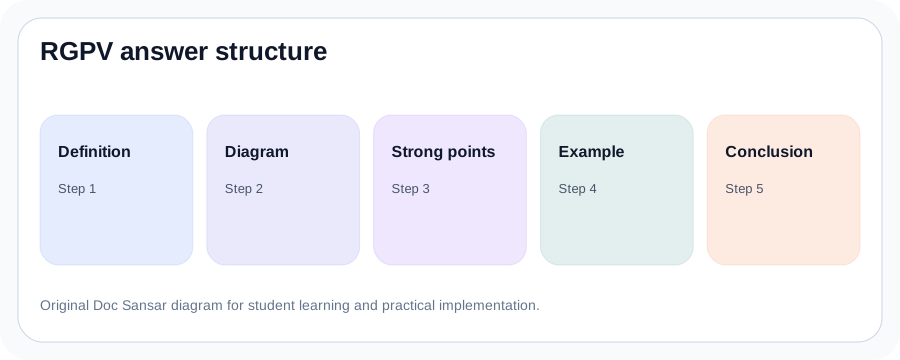 Original Doc Sansar diagram: RGPV Theory Exam Time Management workflow.
Table of contents
- First Ten Minutes
- Question Selection
- Page Planning
- 14-Mark Timing
- Last Fifteen Minutes
- Stress Control
- Rough Work
- Rechecking
Quick practical answer
This guide is designed for students who want a usable method, not a motivational paragraph. Start by understanding the goal, then use the table, examples and checklist to convert the idea into action. When you are preparing for an exam, project, resume or web deployment, the best result comes from a repeatable process: decide the output, divide it into parts, practise the parts and then review with a checklist.
In real student life the problem is usually not lack of information. The problem is scattered information, unclear priority and no final review. Therefore every section below gives a practical use case, a mistake to avoid and a simple way to check your work.
Planning table
| Situation | Best action | Output to create |
|---|---|---|
| First Ten Minutes | Apply the first ten minutes checklist and write the result in your own words. | A small finished first ten minutes deliverable |
| Question Selection | Apply the question selection checklist and write the result in your own words. | A small finished question selection deliverable |
| Page Planning | Apply the page planning checklist and write the result in your own words. | A small finished page planning deliverable |
| 14-Mark Timing | Apply the 14-mark timing checklist and write the result in your own words. | A small finished 14-mark timing deliverable |
| Last Fifteen Minutes | Apply the last fifteen minutes checklist and write the result in your own words. | A small finished last fifteen minutes deliverable |
| Stress Control | Apply the stress control checklist and write the result in your own words. | A small finished stress control deliverable |
First Ten Minutes
First Ten Minutes matters because it changes the work from guesswork into a visible step. A student should not treat this as a theory heading only. Write it down, apply it on one real example and check whether the output can be understood by another person without your explanation.
For example, in the context of rgpv theory exam time management, the first ten minutes stage should produce something concrete: a short answer, a corrected code block, a comparison table, a safer deployment command, a resume bullet or a verified checklist item. If the stage does not produce anything, it has probably remained passive reading.
- First Ten Minutes goal: define the exact result before starting
- First Ten Minutes evidence: add one example, command, diagram or table
- First Ten Minutes review: check accuracy, clarity and missing assumptions
Question Selection
Question Selection matters because it changes the work from guesswork into a visible step. A student should not treat this as a theory heading only. Write it down, apply it on one real example and check whether the output can be understood by another person without your explanation.
For example, in the context of rgpv theory exam time management, the question selection stage should produce something concrete: a short answer, a corrected code block, a comparison table, a safer deployment command, a resume bullet or a verified checklist item. If the stage does not produce anything, it has probably remained passive reading.
- Question Selection goal: define the exact result before starting
- Question Selection evidence: add one example, command, diagram or table
- Question Selection review: check accuracy, clarity and missing assumptions
| Weak approach | Better approach |
|---|---|
| Read about question selection once | Practise question selection on one real question or project |
| Write long paragraphs without structure | Use headings, bullets, examples and review points |
| Ignore mistakes | Keep a correction list and revise it before final work |
Page Planning
Page Planning matters because it changes the work from guesswork into a visible step. A student should not treat this as a theory heading only. Write it down, apply it on one real example and check whether the output can be understood by another person without your explanation.
For example, in the context of rgpv theory exam time management, the page planning stage should produce something concrete: a short answer, a corrected code block, a comparison table, a safer deployment command, a resume bullet or a verified checklist item. If the stage does not produce anything, it has probably remained passive reading.
- Page Planning goal: define the exact result before starting
- Page Planning evidence: add one example, command, diagram or table
- Page Planning review: check accuracy, clarity and missing assumptions
14-Mark Timing
14-Mark Timing matters because it changes the work from guesswork into a visible step. A student should not treat this as a theory heading only. Write it down, apply it on one real example and check whether the output can be understood by another person without your explanation.
For example, in the context of rgpv theory exam time management, the 14-mark timing stage should produce something concrete: a short answer, a corrected code block, a comparison table, a safer deployment command, a resume bullet or a verified checklist item. If the stage does not produce anything, it has probably remained passive reading.
- 14-Mark Timing goal: define the exact result before starting
- 14-Mark Timing evidence: add one example, command, diagram or table
- 14-Mark Timing review: check accuracy, clarity and missing assumptions
| Weak approach | Better approach |
|---|---|
| Read about 14-mark timing once | Practise 14-mark timing on one real question or project |
| Write long paragraphs without structure | Use headings, bullets, examples and review points |
| Ignore mistakes | Keep a correction list and revise it before final work |
Last Fifteen Minutes
Last Fifteen Minutes matters because it changes the work from guesswork into a visible step. A student should not treat this as a theory heading only. Write it down, apply it on one real example and check whether the output can be understood by another person without your explanation.
For example, in the context of rgpv theory exam time management, the last fifteen minutes stage should produce something concrete: a short answer, a corrected code block, a comparison table, a safer deployment command, a resume bullet or a verified checklist item. If the stage does not produce anything, it has probably remained passive reading.
- Last Fifteen Minutes goal: define the exact result before starting
- Last Fifteen Minutes evidence: add one example, command, diagram or table
- Last Fifteen Minutes review: check accuracy, clarity and missing assumptions
Stress Control
Stress Control matters because it changes the work from guesswork into a visible step. A student should not treat this as a theory heading only. Write it down, apply it on one real example and check whether the output can be understood by another person without your explanation.
For example, in the context of rgpv theory exam time management, the stress control stage should produce something concrete: a short answer, a corrected code block, a comparison table, a safer deployment command, a resume bullet or a verified checklist item. If the stage does not produce anything, it has probably remained passive reading.
- Stress Control goal: define the exact result before starting
- Stress Control evidence: add one example, command, diagram or table
- Stress Control review: check accuracy, clarity and missing assumptions
| Weak approach | Better approach |
|---|---|
| Read about stress control once | Practise stress control on one real question or project |
| Write long paragraphs without structure | Use headings, bullets, examples and review points |
| Ignore mistakes | Keep a correction list and revise it before final work |
Rough Work
Rough Work matters because it changes the work from guesswork into a visible step. A student should not treat this as a theory heading only. Write it down, apply it on one real example and check whether the output can be understood by another person without your explanation.
For example, in the context of rgpv theory exam time management, the rough work stage should produce something concrete: a short answer, a corrected code block, a comparison table, a safer deployment command, a resume bullet or a verified checklist item. If the stage does not produce anything, it has probably remained passive reading.
- Rough Work goal: define the exact result before starting
- Rough Work evidence: add one example, command, diagram or table
- Rough Work review: check accuracy, clarity and missing assumptions
Rechecking
Rechecking matters because it changes the work from guesswork into a visible step. A student should not treat this as a theory heading only. Write it down, apply it on one real example and check whether the output can be understood by another person without your explanation.
For example, in the context of rgpv theory exam time management, the rechecking stage should produce something concrete: a short answer, a corrected code block, a comparison table, a safer deployment command, a resume bullet or a verified checklist item. If the stage does not produce anything, it has probably remained passive reading.
- Rechecking goal: define the exact result before starting
- Rechecking evidence: add one example, command, diagram or table
- Rechecking review: check accuracy, clarity and missing assumptions
| Weak approach | Better approach |
|---|---|
| Read about rechecking once | Practise rechecking on one real question or project |
| Write long paragraphs without structure | Use headings, bullets, examples and review points |
| Ignore mistakes | Keep a correction list and revise it before final work |
Common mistakes and fixes
| Mistake | Why it hurts | Fix |
|---|---|---|
| Copying without understanding | You cannot explain it in exam, viva or interview | Rewrite it once in your own words |
| Skipping examples | The answer looks generic and weak | Add one realistic example or command |
| Ignoring final review | Small errors reduce confidence and marks | Use the checklist before submission |
| Trying to perfect everything | Time gets wasted on low-value parts | Prioritise repeated, high-impact areas first |
Final checklist
- Clarity: the main answer is visible in the first few lines
- Structure: headings, bullets, table or code blocks are used where helpful
- Evidence: at least one example, diagram, command or template is included
- Review: common mistakes have been checked
- Next action: one practical step is selected for today
FAQ
Should I memorise the whole guide?
No. Use the guide as a checklist and practise applying the steps on your own syllabus, project or exam paper.
Can a beginner follow this?
Yes, but beginners should move slowly, complete the examples and revise the checklist before jumping to advanced tasks.
What is the biggest mistake to avoid?
The biggest mistake is reading passively. Convert the guide into small actions: write one answer, fix one resume section, test one query or deploy one small project.
Related Doc Sansar resources
- Start Here guide for choosing your next learning path.
- Latest practical guides for exams, placement and development.
- Contact Doc Sansar when you want to suggest a correction or useful resource.
Conclusion and next action
The best way to use this guide is to choose one section and apply it immediately. Do not wait until the full syllabus, full project or full resume feels perfect. Create one improved version today, review it tomorrow and keep a small correction log. That habit is what makes the content useful beyond reading.
Next, open a related guide from Doc Sansar and connect it with your current goal: exam answer writing, placement preparation, project building or safer web development.
How to practise this guide today
Choose one small piece of work and finish it before opening another article. For an exam topic, write one complete answer under a timer. For a resume topic, rewrite two bullets and check whether they show action, technology and result. For a development topic, create a small local file, run the command, read the error and write the solution in a notes file. This active approach is slower than scrolling, but it creates memory and confidence.
Keep a correction notebook with three columns: mistake, correct version and when to revise. The correction notebook is useful because students often repeat the same mistakes: missing definitions, weak examples, wrong commands, unclear diagrams, messy formatting and untested assumptions. A short correction list reviewed every night gives better improvement than reading a new topic without checking old mistakes.
Reader scenario
Imagine a student has only one evening and wants to improve quickly. The smart approach is to pick one high-impact task, use the checklist, produce a visible output and then compare it with the expected structure. This is how a short study session becomes useful. The goal is not to complete the internet; the goal is to complete one reliable unit of work that can be used in an exam, interview, project submission or live website.

Comments
Share a useful question, correction, or practical insight.
Be the first to add a useful insight.