Introduction
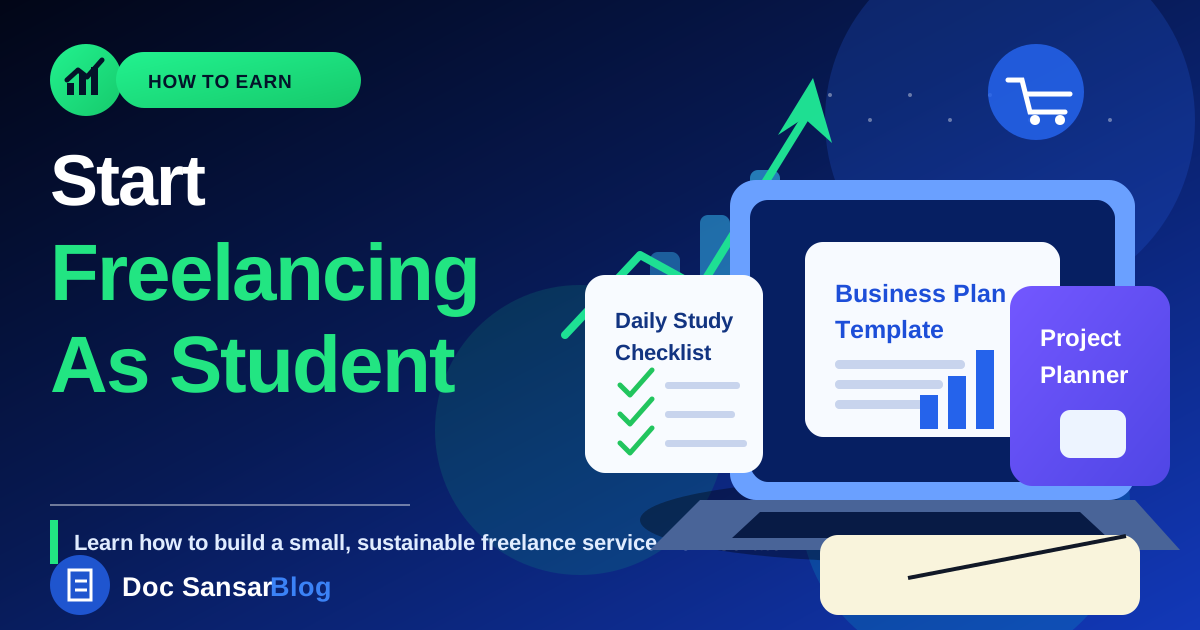
Starting out in the world of independent work can feel overwhelming. Many beginners jump into freelancing without a clear plan, trying to offer everything to everyone, only to find themselves burnt out and without steady clients. The secret to building a sustainable independent career is much simpler: start small. By focusing on a single, well-defined service, you can hone your expertise, build a portfolio of real work, and establish trust with clients much faster than if you tried to manage a broad agency model from day one.
This comprehensive guide is designed for students, beginners, creators, and part-time learners who want to build a small freelance service step by step. Whether you are looking to earn extra income while studying or want to transition into full-time remote work eventually, mastering the fundamentals of service packaging, scoping, and client communication is essential. Throughout this article, you will learn how to identify your core marketable skills, package them into a structured offering, price your work fairly, build an entry-level portfolio, and manage client relationships professionally.
What Is a Small Freelance Service?
A small freelance service is a tightly scoped, specific digital task or ongoing support offering that solves a clear problem for a client. Unlike broad fields like "graphic design" or "content writing," a small freelance service targets a precise business need. For example, instead of offering "website design," a small service might be "custom landing page redesign for local bakeries" or "proofreading and formatting academic research papers."
Focusing on a narrow scope offers major advantages for beginners:
- Faster Delivery: Smaller tasks are easier to complete within a predictable timeframe, reducing the stress of missing deadlines.
- Easier Marketing: When your offer is specific, it is much easier to explain to potential clients exactly how you can help them.
- Lower Risk for Clients: Clients are often hesitant to hire generalists for large projects. A small, well-defined service represents a lower financial risk, making them more likely to say yes.
- Skill Mastery: Repeating a similar task multiple times allows you to refine your workflow, use templates efficiently, and improve your speed and quality.
Why It Matters for Beginners
For students and beginners, time is often severely limited by coursework, exams, or other responsibilities. A flexible, small-scale freelance service allows you to control your workload. You can take on one or two clients a month without sacrificing your primary education or job. Furthermore, building a freelance service teaches vital professional skills that traditional education rarely covers: negotiation, scope management, time tracking, and professional written communication.
When you build a small service correctly, you create a repeatable system. Instead of reinventing the wheel for every new inquiry, you follow a standardized process from onboarding to delivery. This reduces cognitive fatigue and makes remote work sustainable over the long term.
Step 1: Identify Your Core Marketable Skills
Every successful freelance service begins with an honest inventory of your current abilities. You do not need to be a world-class expert to start; you just need to be slightly more knowledgeable or capable than the person who lacks the time, tools, or inclination to do the task themselves.
To identify your skill set, ask yourself the following questions:
- What software, tools, or platforms am I comfortable using on a daily basis? (e.g., spreadsheet applications, content management systems, basic design tools, video editors).
- What tasks do friends, classmates, or colleagues frequently ask me to help with?
- What subjects did I study or projects did I complete during my education that could translate into a digital service?
Common beginner-friendly domains include basic transcription, data cleaning and organization, social media graphic formatting, basic video clipping for creators, proofreading, and basic customer support documentation. Choose one area that you genuinely enjoy or are curious to learn more about.
Step 2: Define and Package Your Offer
Once you have identified your skill, you must turn it into a productized service. Clients do not buy your time; they buy the result or relief that your service provides. Packaging your service means defining exactly what is included, what is excluded, how long it takes, and what the client receives at the end.
Let us look at a comparison between a vague offer and a well-packaged service:
| Vague Offer (Avoid) | Packaged Service (Recommended) |
|---|---|
| "I will write articles for you." | "SEO-optimized 1,000-word blog post package, including keyword research, outline approval, and one round of revisions delivered in 4 days." |
| "I do graphic design." | "Social Media Starter Kit: 5 branded Instagram template designs in Canva with exported PNG files and basic usage instructions delivered in 3 days." |
| "I can fix your data." | "Spreadsheet Cleanup: Organizing up to 1,000 rows of messy customer data, removing duplicates, and formatting headers into a clean template delivered in 48 hours." |
Structuring your service this way removes ambiguity. The client immediately understands what they are paying for, and you protect yourself from endless scope creep.
Step 3: Determine Your Pricing Strategy
Pricing is one of the most challenging aspects for beginner freelancers. As an ethical practice, avoid quoting arbitrary numbers or undercutting the market to an unsustainable degree just to win a client. Instead, consider value-based pricing or project-based flat rates.
For small services, flat-rate pricing is usually the best choice for both parties. A flat rate gives the client budget certainty—they know the exact cost before work begins. For you, it means your earnings are tied to your efficiency rather than penalizing you for working faster.
When calculating your flat rate, consider:
- The actual hours the task takes you to complete.
- Platform fees or software subscription costs required to deliver the service.
- An hourly floor that respects your time while remaining competitive for a beginner.
Never offer free speculative work or enter into agreements where payment is contingent on vague future promises. Always establish clear payment terms, such as a 50% deposit upfront and 50% upon final delivery for larger tasks, or full payment upfront for smaller, quick-turnaround services.
Step 4: Build Your Initial Portfolio
Clients want proof that you can deliver what you promise. If you are just starting out, you might worry that you do not have enough past client work to showcase. Fortunately, you can build a credible portfolio through self-initiated projects, pro bono work for non-profits, or mock samples.
Create three distinct examples that demonstrate your capability. For instance, if your service is spreadsheet organization, create three anonymized templates showing raw messy data transformed into clean, professional dashboards. If your service is formatting academic papers, create sample documents showing proper citation alignment and header hierarchy.
Present these samples clearly on a simple personal webpage, a professional profile, or a digital folder. Include a short description of the problem solved, the tools used, and the result achieved.
Step 5: Establish a Professional Workflow and Communication Standard
Technical skill is only half of freelancing; professionalism is the other half. Many freelancers fail not because their work is poor, but because their communication is erratic, slow, or disorganized.
Establish a standard operating procedure for every client interaction:
- Initial Inquiry: Respond promptly with a polite, concise message acknowledging their request and asking clarifying questions if necessary.
- Proposal/Scope Confirmation: Send a brief written summary outlining the project scope, timeline, deliverables, and price. Never start work without mutual agreement on these points.
- Execution & Updates: Keep the client informed if any minor delays occur. Deliver the work on or before the promised deadline.
- Revisions and Handover: Clearly state your revision policy beforehand (e.g., "includes two rounds of minor edits within 7 days of delivery"). Hand over the final files in the agreed format.
Common Mistakes to Avoid
When building a small freelance service, beginners frequently fall into traps that can be easily avoided with foresight:
- Accepting Scope Creep: Agreeing to add extra tasks outside the original agreement without adjusting the timeline or price. Always clarify what is included.
- Ignoring Written Agreements: Relying on casual verbal agreements in chat apps without a written summary of deliverables. Always keep a paper trail of project expectations.
- Overcommitting: Taking on too many clients while balancing studies or other jobs, leading to missed deadlines and poor quality work. Start with one client at a time.
- Poor Time Management: Underestimating how long a digital task takes. Always add a 20% buffer to your estimated delivery time to account for unexpected snags.
- Neglecting Communication: Going silent for days while working on a project. Regular, brief status updates build immense client trust.
- Use Secure Authentication: Enable multi-factor authentication (MFA) on all email accounts, freelance platforms, cloud storage, and communication tools you use.
- Protect Client Data: Never store sensitive client passwords, financial records, or proprietary information on unsecured personal devices. Use encrypted cloud folders and delete local copies of sensitive files once the project is successfully completed and archived.
- Verify Clients: Be cautious of clients who refuse to use standard platform messaging, ask you to communicate exclusively through obscure external apps immediately, or request that you download unverified software or executable files to review project requirements.
- Understand Payment Safety: Stick to reputable, secure payment processors and platform escrow systems. Never accept overpayment checks with a request to wire back the difference, as this is a common financial scam.
- Communication: Professional email, structured chat tools, or video meeting software for client intake.
- Organization & Project Management: Simple spreadsheets, digital kanban boards, or note-taking apps to track project milestones and deadlines.
- Portfolio Hosting: Free or low-cost portfolio builders, clean documentation platforms, or organized cloud folders with public viewing links.
- Time Tracking: Basic desktop timers or manual logs to measure how long specific tasks take you, helping you price future projects more accurately.
Safety and Security Considerations
Remote work and digital freelancing require constant vigilance regarding online safety and data privacy. Because you will often handle client files, credentials, or sensitive business data, you must adopt robust security habits from the beginning.
Protect yourself and your clients by following these practices:
Tools and Resources
You do not need expensive software suites to build a small freelance service. A lean digital toolkit is more than enough for beginners:
FAQs
How much experience do I need before starting a small freelance service?
You do not need years of professional agency experience. You simply need a reliable grasp of the specific task you are offering and the ability to demonstrate your capability through clear portfolio samples.
Can I run a freelance service part-time while studying?
Yes. In fact, starting part-time is recommended for students and beginners. By limiting your service to a very specific, well-scoped task, you can easily handle one or two clients a month without interfering with your education.
What should I do if a client asks for work outside our original agreement?
Politely remind the client of the agreed-upon scope. Let them know that you would be happy to accommodate the additional request as a separate add-on service with an adjusted timeline and price quote.
How do I handle my first client when I have no testimonials?
Focus your initial pitch on your concrete samples, your responsiveness, and your willingness to follow instructions carefully. Offering a clear, risk-free scope of work often matters more to a busy client than a long list of past testimonials.
Is it necessary to create a formal contract for small services?
While formal legal contracts are ideal for large projects, a clear written email confirmation or message thread outlining the deliverables, price, timeline, and revision policy is essential for every small service to ensure mutual understanding.
Conclusion
Building a small freelance service step by step is one of the most reliable ways for students, beginners, and creators to enter the world of independent digital work. By narrowing your focus to a single, specific task, packaging your offer clearly, pricing fairly, and maintaining high standards of professional communication and digital safety, you lay the groundwork for sustainable career growth.
Remember that every experienced freelancer started with their very first small project. Take your time to assess your skills, build your initial portfolio samples, and approach client relationships with honesty and organization. Consistency and professionalism will always set you apart in the remote work landscape.

Comments
Share a useful question, correction, or practical insight.
Be the first to add a useful insight.